

Last Updated: November 1, 2026
Quick Summary
For most people who prepare, cook or serve food professionally, level 2 food safety training is worth it, because it covers the day-to-day handling, preparation and storage skills most food roles need. Its value depends on your role, your responsibilities and how the course is delivered.
- Level 2 suits anyone who regularly prepares, cooks or serves food, not only those handling sealed goods.
- Choose Level 1 if your contact with food is limited, and consider Level 3 for supervisors and managers.
- Compare format, assessment method and certificate details, not price alone, before booking.
- A certificate shows training at a point in time; compliance depends on daily practice and records.
- Check your employer's or client's expectations before assuming a certificate lasts indefinitely.
Table of Contents
- Is Level 2 Food Safety Training Worth It for Most Food Workers?
- What Level 2 Food Safety Training Covers
- Who Needs Level 2 Food Hygiene Training
- Level 1 vs Level 2 Food Hygiene: Which Fits Your Role
- How Long a Level 2 Food Hygiene Course Takes and What It Costs
- Legal Duties, Recommended Training and the Certificate: What Is the Difference
- Applying Food Hygiene Practices Once You Have Trained
- Choosing Your Level 2 Food Safety Course Next
- Frequently Asked Questions
Is Level 2 Food Safety Training Worth It for Most Food Workers?
Is level 2 food safety training worth it? For most people who handle food in a professional setting, the answer is yes, but the value depends on your role, your responsibilities and how the training is delivered. This guide sets out what the course covers, who it suits, and how to decide.
Level 2 food hygiene training gives staff a working understanding of safe handling, preparation and storage. It is designed for people who regularly prepare, cook or serve food, rather than those who only handle sealed goods. The practical question is whether your team needs that knowledge day to day, and the answer for most catering, hospitality and food production roles is that it does.
Our Food Safety Level 2 Online course is priced at £35.00, which makes it one of the more affordable routes to a recognised qualification. You can complete it at your own pace.
What Level 2 Food Safety Training Covers
Level 2 food safety training covers the core principles of safe food handling. Learners study how to prepare, handle and store food safely, how to reduce the risk of contamination, and how good personal hygiene protects customers. The course is built around current UK food safety legislation, so the content reflects the standards that inspectors and employers expect.
The subject matter goes beyond basic rules. Learners look at why hazards arise, how cross-contamination happens in busy kitchens, and what to do when something goes wrong. That focus on reasoning is what makes the training useful at work, because staff can apply the principles to situations a rulebook does not cover.
Our Food Safety Level 2 Online course, without the exam is priced at £35.00 and is one route to this material. It is suitable for beginners and for people who want to refresh what they already know. The course is available all year round and can be completed at your own pace online, which suits staff working shifts.
There is also the Food Safety Level 2 Online with the Exam for £95
Who Needs Level 2 Food Hygiene Training
Anyone who handles or prepares food as part of their job should consider Level 2 training. Typical roles include catering staff, retail food workers, food manufacturing employees and volunteers who prepare food for others. Supervisors and managers often need it too, because they are responsible for setting and checking standards for their teams.
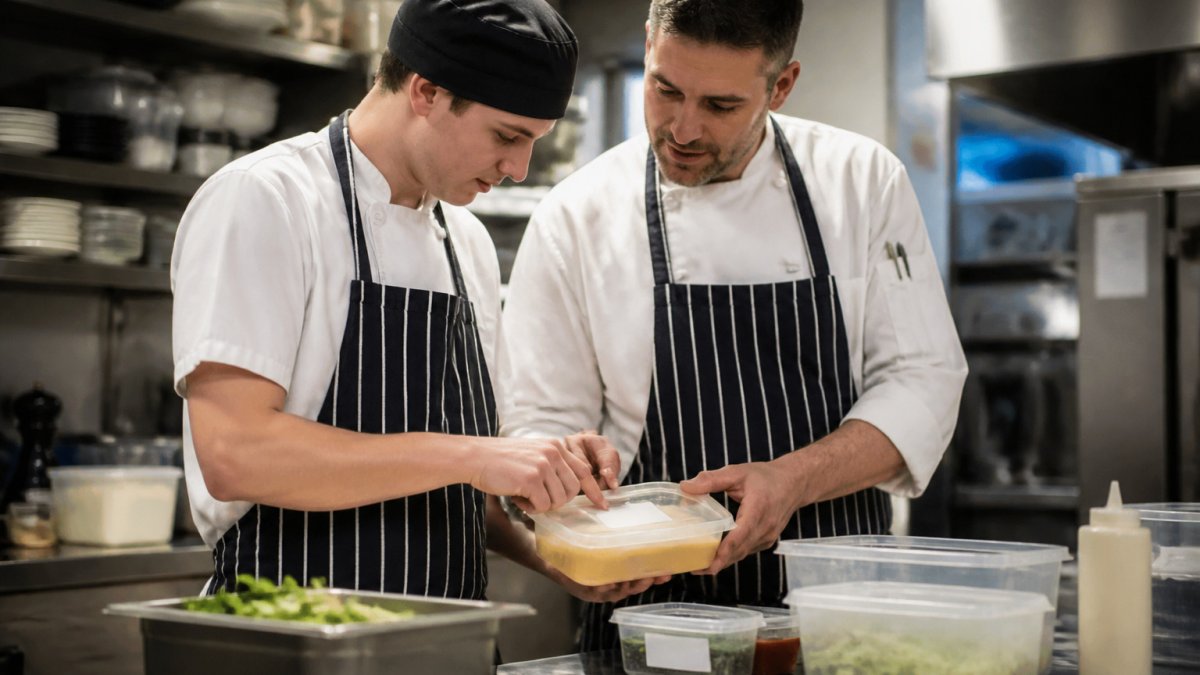
The situations where training matters most are the ones with the highest exposure to risk: preparing high-risk foods, working with allergens, and cleaning down equipment. If your role involves any of these, the training pays for itself in fewer errors and clearer standards. Staff who only occasionally touch food, such as a front-of-house member handling sealed drinks, may find a lower-level course sufficient.
Our Food Safety Face to Face courses are available for teams who prefer on-site or classroom delivery. Contact our team on 0330 999 3199 to check upcoming dates.
Level 1 vs Level 2 Food Hygiene: Which Fits Your Role
Level 1 food hygiene is an introduction to food safety. It suits people starting out in the food industry or working in low-risk environments where their contact with food is limited. Level 2 goes further, covering the practical handling, preparation and storage that most food workers carry out every day.
In practice, the choice usually comes down to what you do. If you prepare, cook or serve food as a regular part of your work, Level 2 is the more appropriate level. If your role is to be aware of food safety rather than to perform most food tasks, Level 1 may be enough. Supervisors and managers who set standards for others often look to Level 3 instead, which covers management systems and legal responsibilities.
Our Food Safety Level 1 Online course costs £25.00, and our Food Safety Level 3 Online course costs £185.00.
How Long a Level 2 Food Hygiene Course Takes and What It Costs
The length of a Level 2 course depends on the format you choose, and the format also changes what you get for the money. Online courses let learners work through the material at their own pace, which suits people fitting training around shifts. Face-to-face courses are delivered at training centres or on-site at your premises, which can suit teams who learn better in a group.
Assessment is the other difference worth checking before you book. Check what your employer or client expects before you assume a certificate lasts indefinitely. (Source: the Food Safety Act 1990)
Cost is the other factor most people weigh. Our Food Safety Level 2 Online course is £35.00. Our Food Safety Face to Face courses are priced at £75.00. Our Food Safety Level 4 course costs £875.00 and is aimed at managers, supervisors and head chefs who want deeper knowledge.
The table below sets out the course formats and prices mentioned in this section, so you can compare them at a glance.
Course |
Format |
Price |
|---|---|---|
Food Safety Level 2 Online |
Online, own pace |
£35.00 |
Food Safety Face to Face |
Classroom or on-site |
£75.00 |
Food Safety Level 4 |
Managers and supervisors |
£875.00 |
Legal Duties, Recommended Training and the Certificate: What Is the Difference
It helps to separate three things that are often confused, because the difference decides what you actually need to buy and what you can safely leave out.
The first is the legal duty. In the UK, food businesses must ensure that food handlers are supervised and instructed and/or trained in food hygiene matters commensurate with their work activity (Running a food business: Your responsibilities). The duty sits with the business, and the law does not require a specific certificate or a named course. That means a business can meet the duty through in-house instruction, supervision and training rather than by sending every member of staff on an external course. The Food Standards Agency publishes guidance on what this means in practice, and it is the right place to check the current expectations for your setting (Managing food safety).
The second is recommended training. A recognised qualification is one way to show that staff have the knowledge the law expects, and many employers use it as a practical benchmark when they recruit or assess teams. Recommended does not mean mandatory: a small café with two staff who only reheat pre-cooked food may meet its duty with a short induction and close supervision, while a busy kitchen preparing high-risk foods will usually find a Level 2 course the simplest way to demonstrate competence. The right answer depends on the risk in your operation, not on a blanket rule.
The third is the certificate itself. Holding a certificate is not the same as being compliant. A certificate shows that someone completed training at a point in time; compliance depends on how staff apply what they learned every day, and on whether the business has the procedures, supervision and records to back it up. An inspector is more interested in your temperature logs, cleaning schedules and allergen records than in a framed certificate.
When you are choosing a provider, check the quality signals rather than the price alone. Look for a named awarding body, a stated assessment method, clear learning outcomes and a certificate that identifies the level and the date. Employers increasingly ask for these details, and a course that cannot state them is harder to defend. The Food Standards Agency and your local authority environmental health team can confirm what is expected in your area, and the Chartered Institute of Environmental Health publishes information on recognised qualifications and professional standards.
Applying Food Hygiene Practices Once You Have Trained
Training only has value if it changes behaviour on the job. The most common gap we see is staff who pass the course but do not carry the habits into daily work. Handwashing before handling food, keeping raw and ready-to-eat foods apart, and checking temperatures are simple practices, but they slip when teams are busy.
Managers can help by setting clear routines, checking them regularly and reinforcing the reasons behind them. A short briefing at the start of a shift, a visible cleaning schedule and a named person responsible for checks all make a difference. Watch out: a certificate on the wall does not tell an inspector how your team behaves during a service rush.
Practical application also means reviewing your procedures when your menu, equipment or staffing changes. Training gives the knowledge; your systems turn it into consistent practice.
Choosing Your Level 2 Food Safety Course Next
Once you have decided that Level 2 training suits your role, the next step is choosing a course. Compare the level, the format, the price and the assessment before you book. If your team needs a flexible route, the online option is a practical starting point. If you need training delivered on site, the face-to-face courses may be a better fit.
Our Food Safety Level 2 Online course is £35.00 and can be completed at your own pace.
Frequently Asked Questions
Is a Level 2 food hygiene certificate a legal requirement?
UK food businesses must make sure food handlers are supervised and trained in food hygiene appropriate to their work. The law does not name one specific certificate, so a Level 2 certificate is not automatically a legal requirement. It is widely used as evidence that training has been done, and it is a practical way to meet the duty to train. Check the official guidance published by the Food Standards Agency and your local authority for the exact obligations that apply to your business.
How does Level 2 food hygiene training compare with Level 1?
Level 1 covers the basics of food hygiene for staff in low-risk roles, such as handling pre-packed food or working around food without preparing it. Level 2 goes further, covering safe food preparation, handling, personal hygiene, cleaning and contamination control for people who prepare, cook or serve food. Most catering, retail and food production staff who handle open food will need Level 2 or a similar qualification.
Which food safety certification is best for a food handler?
For most people who prepare or handle open food in the UK, a Level 2 food safety course is the usual starting point. Knight Training offers Food Safety Level 2 Online at £35.00, which can be completed at your own pace and suits both beginners and those refreshing their knowledge. Supervisors and managers may need Level 3 instead, and Level 1 suits staff with limited contact with food.
How long does Level 2 food safety training take?
Online Level 2 food safety training can be completed at your own pace, so the time depends on your prior knowledge and how much you study each day. The course is available all year round, which means you can start when it suits you rather than waiting for a fixed class date. Face-to-face courses are delivered at training centres or on your premises, so check upcoming availability before you plan your shifts.
Contact Knight Training today to find the right course for your team. We are accredited by the Highfield Awarding Body and our team can help you choose the level that fits your role.
