

Table of Contents
- What You'll Need Before You Apply
- Step 1: Build an Operating Schedule That Meets Requirements
- Step 2: Get Blue Notice Advertising Requirements Right
- Step 3: Manage the Premises Licence Representation Period
- Step 4: Submit to the Council and Responsible Authorities
- Common Mistakes That Delay Premises Licence Applications
- When to Bring In a Licensing Application Service
- Frequently Asked Questions
Last Updated: October 1, 2026
What You'll Need Before You Apply
Most delays in premises licence applications start long before anything reaches the council. They start with a missing document or a form filled in wrong. Applications are often bounced back over small errors that are easy to avoid.
A premises licence is the permission a venue needs to carry out licensable activities. These include selling alcohol, showing films, playing live or recorded music, and serving hot food or drink between 11pm and 5am. Securing these permissions often requires synchronising your operational plans with local zoning requirements, as avoiding planning permission delays remains a critical step in ensuring your venue can legally host such activities without interruption.
Before you apply, gather these:
- A completed application form for your local council
- A detailed plan of the premises, drawn to scale
- Your operating schedule (more on this below)
- The correct fee, based on your venue's rateable value
- Consent from anyone who will hold a specified role, such as the designated premises supervisor
The Licensing Act 2003 sets out these requirements in law. Miss one, and the council can reject your application outright.
Step 1: Build an Operating Schedule That Meets Requirements
Your operating schedule is the heart of the application. It tells the council exactly how you will run the venue and prevent trouble.
Operating schedule requirements cover four licensing objectives:
- Preventing crime and disorder
- Public safety
- Preventing public nuisance
- Protecting children from harm
Each objective needs a clear answer. Vague promises like "staff will be vigilant" get picked apart. Instead, state what you will actually do:
- Door staff numbers and hours
- CCTV coverage and retention periods
- Challenge 25 policy for age checks
- Last entry times and capacity limits
Get this section right and the rest of the process runs smoother. Get it wrong and you risk objections from the police or environmental health.
Step 2: Get Blue Notice Advertising Requirements Right
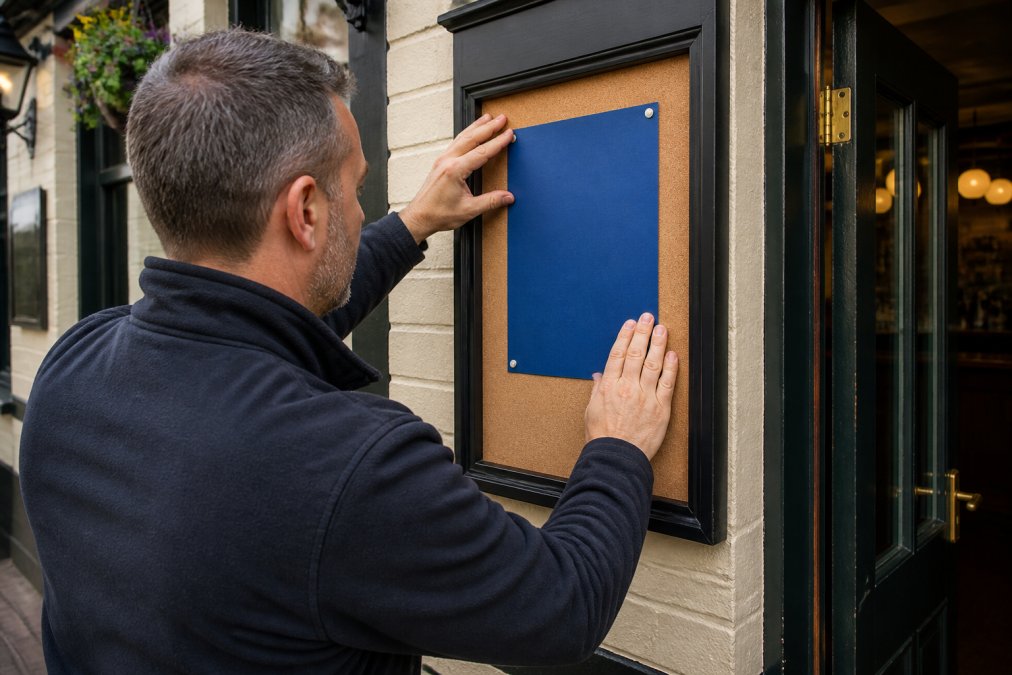
Blue notice advertising requirements are simple, but easy to get wrong. A blue notice is the public notice you must display at the premises so neighbours know about your application.
The rules are strict:
- Display the notice for 28 days, starting the day after you submit (The Licensing Act 2003 (Premises licences and club premises certificates) Regulations 2005)
- Use the correct size and colour (A4, pale blue)
- Place it where the public can read it easily
- Keep it visible and intact for the full period
You must also advertise in a local newspaper within 10 working days of applying. This is where costs can surprise people. Budget for it early.
Step 3: Manage the Premises Licence Representation Period
The premises licence representation period is the 28-day window when people can object to your application. It runs alongside your advertising period.
Responsible authorities, such as the police, fire service, and environmental health, can also make representations. So can neighbours and local businesses.
What counts as a valid representation?
- It must relate to at least one licensing objective
- It must not be frivolous or vexatious
- It must arrive within the 28 days
If no representations come in, the council must grant the licence as applied for. If they do, the application goes to a licensing sub-committee hearing. That can add weeks to your timeline.
The fix is preparation. Talk to the police and environmental health before you apply. Address their concerns in your operating schedule. Most objections disappear when you have already solved the problem on paper.
Licence Application Services including →
Step 4: Submit to the Council and Responsible Authorities
Once your paperwork is ready, you send the application to your local council and copy it to every responsible authority. There are nine of them, including the police, fire authority, and trading standards.
A few practical points:
- Submit online where your council allows it
- Keep proof of every submission and payment
- Send copies to all responsible authorities on the same day
- Note the date you display your blue notice
The council then checks your application against its licensing policy. Any gap in the pack slows everything down. This is where most avoidable delays in premises licence applications actually happen.
Common Mistakes That Delay Premises Licence Applications
The same errors come up again and again. Here is what to watch for, and how to fix each one.
| Mistake | Why It Delays You | The Fix |
|---|---|---|
| Vague operating schedule | Authorities object, forcing a hearing | State specific measures for each objective |
| Blue notice removed early | Objections based on invalid advertising | Photograph the notice daily |
| Missing DPS consent form | Council rejects the pack | Get written consent before submitting |
| Wrong fee band | Application held while fee is corrected | Check rateable value first |
| Late newspaper advert | Advertising period deemed invalid | Book the advert within 10 working days |
Two more traps catch people out. First, applying before you have the right personal licence holder in place. Second, ignoring early correspondence from the council. Answer every query the same day if you can.

When to Bring In a Licensing Application Service
Some applications are straightforward. Others are not. If you are opening a late-night venue, converting a building, or applying in an area with a cumulative impact policy, the risk of delay rises sharply.
A licensing application service handles the parts that trip people up:

- Completing and submitting all forms correctly
- Liaising with all nine responsible authorities
- Confirming the rateable value that sets your fee
- Producing the newspaper advert
Knight Training offers a full premises licence application service that covers exactly this. The team deals with local authorities daily, so they know what each one expects.
For venues with staff who need qualifications first, Knight Training also runs a personal licence course and application package. It combines the Level 2 Award for Personal Licence Holders with the full application service, all completed online.
If you are weighing up whether to go it alone, ask one question: how much would four extra weeks of delay cost you? For most venues, the answer makes the decision easy.
GOV.UK guidance on alcohol licensing sets out the full process if you want to check the official steps yourself.
Delays in licensing rarely come from the council being slow. They come from applications that were not ready. The venues that open on time are the ones that prepare their operating schedule, advertising, and paperwork before they submit. Knight Training can take that whole burden off your plate, from completing the forms and liaising with all nine responsible authorities to confirming your rateable value and producing the newspaper advert. Our team is accredited by the Highfield Awarding Body and the British Institute of Innkeeping, and customers regularly tell us the process felt straightforward and painless from start to finish. Contact us today to get your premises licence application moving.
Frequently Asked Questions
How long does a premises licence application take to process?
Once a valid application is submitted, the consultation period runs for 28 days. If no representations are made, the council must grant the premises licence as applied for. In practice, most straightforward applications complete within six to eight weeks from submission, though this depends on how quickly you respond to any queries from the licensing authority.
Do I need to advertise my premises licence application?
Yes. You must display a blue notice at the premises for 28 days starting on the day you submit the application. You also need to publish a notice in a local newspaper within 10 working days of submission. Both are legal requirements under the Licensing Act 2003, and missing either is one of the most common reasons for delay.
What is the premises licence representation period and how can I prepare for it?
The representation period is the 28-day window during which responsible authorities and other parties can raise concerns about your application. To prepare, make sure your operating schedule directly addresses the four licensing objectives and that your blue notice is correctly displayed and worded. If a representation is made, you can often resolve it through mediation before a hearing is needed.
Can I use a licensing application service to speed things up?
Yes. A professional service handles form completion, distributes copies to all responsible authorities, confirms your fee band based on rateable value, and produces the newspaper advert. Knight Training's premises licence application service includes all of this, and their team liaises with the nine responsible authorities daily to keep applications moving.